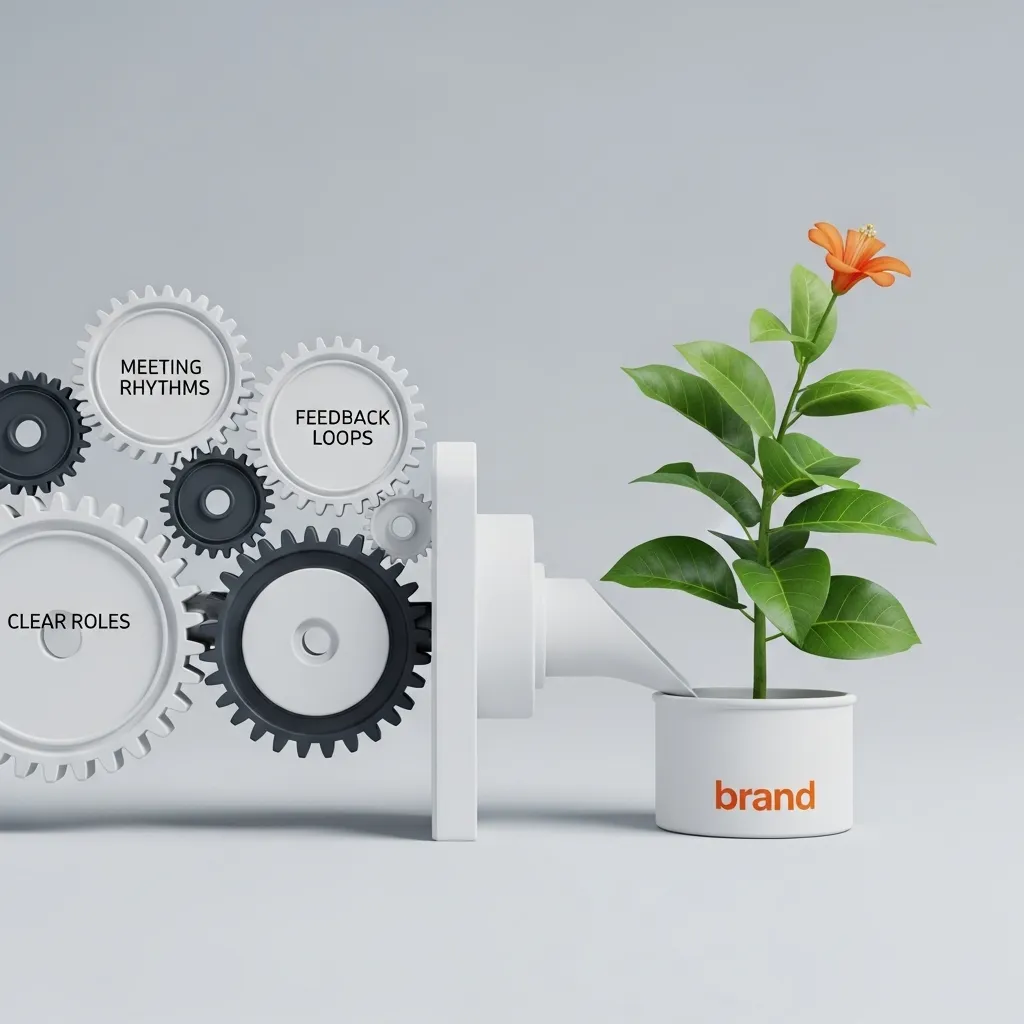
The Flourishing Team: How to Design an Operation That Creates the Culture You Crave
Ask a founder how they’re building a great company culture, and you’ll likely hear a familiar list: pizza parties, flexible time off, a new ping-pong table. These perks are nice. But they do not create a great culture.
A common myth in the business world is that culture is something you "build" through events, benefits, and motivational posters.
The truth is far more structural. Culture is not what you say; it is the direct, unavoidable output of your daily operational design.
Your meeting rhythm is your communication culture.
Your feedback process is your growth culture.
Your workflow design is your accountability culture.
You don't get the culture you want; you get the culture you architect. Research from Gallup has consistently shown that the most significant factor in employee engagement is not a perk, but the clarity and support they receive from their direct manager—something that is entirely dependent on the operational systems in place.
So, how do you move from simply hoping for a good culture to intentionally architecting one?
The 3 Systems That Actually Define Your Culture
Instead of focusing on perks, a business architect focuses on the three core systems that have the biggest impact on a team's daily experience.
The Meeting Rhythm: Your Communication Architecture
The Problem: Chaotic, last-minute meetings with no clear agenda create a culture of anxiety and signal that the team's time is not respected.
The Architectural Fix: Install a simple, predictable Meeting Cadence. This is a non-negotiable rhythm of meetings (e.g., a 15-min daily huddle, a 60-min weekly tactical meeting) that happen at the same time, with the same agenda, every single week. This system architecturally creates a culture of clarity, respect, and proactive communication.
Actionable Step: For your next weekly team meeting, use a simple, shared agenda with three sections: "Wins," "Priorities for the Week," and "Roadblocks." Stick to it ruthlessly.
The Feedback Loop: Your Growth Architecture
The Problem: A lack of clear, consistent feedback (both positive and constructive) creates a culture of uncertainty and fear. Team members don't know where they stand or how to improve.
The Architectural Fix: Design a simple Feedback Loop. This could be a lightweight system of regular, informal 1-on-1s. As Kim Scott, author of Radical Candor, argues, the goal is to create a system where guidance is "kind, clear, specific, and sincere."
Actionable Step: Schedule a simple, 20-minute 1-on-1 with each of your direct reports this week. Ask them two questions: "What is one thing going well right now?" and "What is one thing that is making your work harder than it needs to be?"
The Workflow Design: Your Accountability Architecture
The Problem: Confusing processes with no clear owner create a culture of blame and dropped balls. Team members can't take ownership if ownership isn't clearly defined.
The Architectural Fix: For every critical project, use a simple Roles & Responsibilities Matrix (like a DACI or RACI chart). This ensures everyone knows exactly what they are responsible for, who they need to consult, and who has the final say.
Actionable Step: The next time a new project starts, take 5 minutes at the beginning of the kickoff call to write down the name of the one person who is the "Project Lead"—the single point of accountability for its success.
Stop trying to buy culture with perks. Start architecting the simple, daily systems that will produce a resilient, flourishing, and people-first environment as a natural result.
